Welcome to part two of my 2026 predictions series. If you haven't read part one, where I broke down why hyper-personal engagement will redefine brand loyalty, I highly recommend that you open a new tab and read that one first. It sets the foundation for everything I'm building on here.
In this installment, I'm getting into two shifts I believe will define how the smartest brands operate in 2026: the move from demographic-based inclusion to identity-and-interest-based strategy, and the imperative for brand marketing that actually solves real problems rather than just telling stories about them.
These aren't abstract trend forecasts. They come from years of work in cultural marketing, partnership strategy, and watching what happens when brands either get this right or miss it entirely.
Highlights
- Inclusion in 2026 must evolve beyond demographic checkboxes toward the intersection of identity, interest, and culture.
- The most effective community strategies don't segment audiences by who they are alone — they find the overlap between who people are, what they care about, and where those things show up in culture.
- Brands expanding across Africa must identify cultural intersections where their offerings can authentically meet consumers, not just replicate Western market playbooks.
- Product diversification decisions rooted in cultural moments outperform those driven by traditional demographic logic.
- The most impactful brand marketing in 2026 will move beyond storytelling and into structural problem-solving: access, infrastructure, health, finance, education, and creative opportunity.
- Consumers are brand-aware, they understand their value, and they are increasingly choosing companies that contribute to market growth rather than extract from it.
Prediction Two: Inclusion Moves From Demographics to the Intersection of Identity and Interest
The Framework
My second prediction for 2026 is that inclusion will move beyond demographic checkboxes and into something far more intentional: the intersection of identity and interest.
This is a concept I developed during my time at Twitter, where our team came to a critical realization. We couldn't keep approaching communities solely based on how they identified. That was a ceiling, not a strategy. The real sweet spot of community and connection is where identity meets interest, and where those interests collide within culture.
That's the formula. Identity times interest times culture equals the sweet spot.
Why It Matters Now
For too long, brands have relied on rigid audience targets: demographic segments, identity-based buckets, personas built on who someone is rather than what they actually care about and where they show up. That approach misses the dynamism of how people actually live, consume, and connect.
The shift I'm calling for is this: brands need to focus on where their product or service meets their consumers' needs out in culture. Not in a spreadsheet. Not in a segmentation deck. In culture.
The Koy Example
Take Koy, a Ghanaian brand founded by Hayet, traditionally centered on women's jewelry and accessories. In its newest wedding collection, the brand expanded its offering to include pieces for men.
Here's the thing: some men love fashion and will absolutely invest in a statement piece for an elevated-looking event. They will do it.
So break it down. Identity: men. Interest: fashion. Culture: a cultural event like a wedding. That's the intersection. That's the sweet spot.
The Billionaire Boys Club x Topicals Example
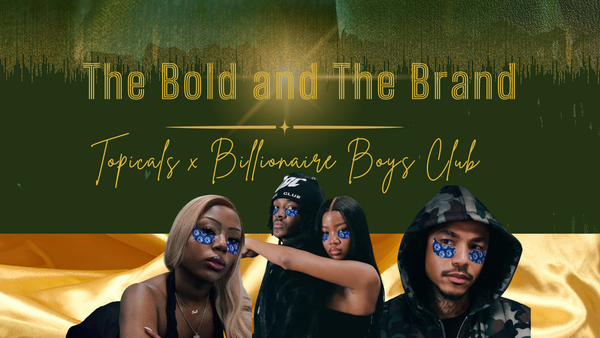
Then there's the Billionaire Boys Club partnership with Topicals — a clothing brand moving into beauty and wellness. I talked about this in the previous episode, but it's worth underscoring here.
These decisions aren't just about product diversification. They're about acknowledging that cultural moments like weddings, fashion, and self-expression are experienced collectively across consumer bases — not just through a single gender or a traditional lens.
The Africa Expansion Imperative
In 2026, brands looking to expand across Africa especially have to find these intersections. The opportunity isn't just geographic expansion. It's about meeting customers where identity, interest, and culture converge, and expanding offerings to genuinely reflect that.
Prediction Three: Brand Marketing That Solves, Not Just Tells
The Shift From Storytelling to Problem-Solving
My last prediction is less of a prediction and more of a continued hope: that brands lean heavily into marketing that solves fundamental challenges across the continent.
In 2026, the most impactful brand marketing will move beyond storytelling alone and into problem-solving. As global brands expand, the question should not only be, "How do we show up?" It should be, "What real challenges can we help address through our presence?"
What This Is Not
This isn't about philanthropy. It's not about corporate social responsibility campaigns that sit on the sidelines. Those are table stakes at best, and performative at worst.
This is about brands designing products, partnerships, and activations that respond to real structural realities: access, infrastructure, education, mobility, health, finance, inclusion, and creative opportunity.
Why Consumers Are Driving This
Consumers are deeply brand-aware. They understand their value. And they are increasingly aligning with companies that don't just extract from a market but contribute to its growth and its resilience.
This is where innovation meets responsibility. Where brand marketing's purpose meets practical impact. And it's my sincerest hope for all brands in 2026.
Strategic Insight
Across both of these predictions, there's a single underlying shift: the most forward-thinking brands in 2026 will stop treating their audiences as static categories and start treating culture as the operating system for how they build, expand, and show up.
The identity-interest-culture framework isn't just a community engagement tool. It's a product strategy. It's a market expansion lens. It's the difference between a brand that enters a new region with assumptions and one that enters with actual cultural intelligence.
And the call for problem-solving marketing isn't idealism. It's a market signal. Consumers across the African continent and globally are making purchasing decisions based on whether brands contribute meaningfully or simply extract value. That dynamic will only accelerate.
The brands that win in 2026 won't be the ones with the biggest campaigns. They'll be the ones that understood where identity, interest, and culture intersect — and built products, partnerships, and presence that addressed real needs at that intersection.
Key Takeaways
- The sweet spot of community and connection is where identity meets interest within culture — not where demographics meet a media buy.
- Product diversification rooted in cultural moments is a more powerful growth strategy than diversification driven by traditional audience segmentation.
- The brands that will lead in 2026, especially in African markets, are the ones that move from storytelling to structural problem-solving through their products, partnerships, and activations.
- Consumers understand their value and are aligning with brands that contribute to the growth and resilience of the markets they enter.
- Innovation and responsibility are not competing priorities. They are the same strategy.
What's Next
That wraps Part Two of The Bold and the Brand: my 2026 predictions.
The Bold and The Brand is a series dedicated to naming the shifts that are already underway and giving brand leaders, founders, and strategists the frameworks to move with them, not behind them. The intersection of identity, interest, and culture isn't a theory. It's a practice.
And for the brands willing to do the work, 2026 is the year to prove it.